
Change Your Mind
Mar 17, 2026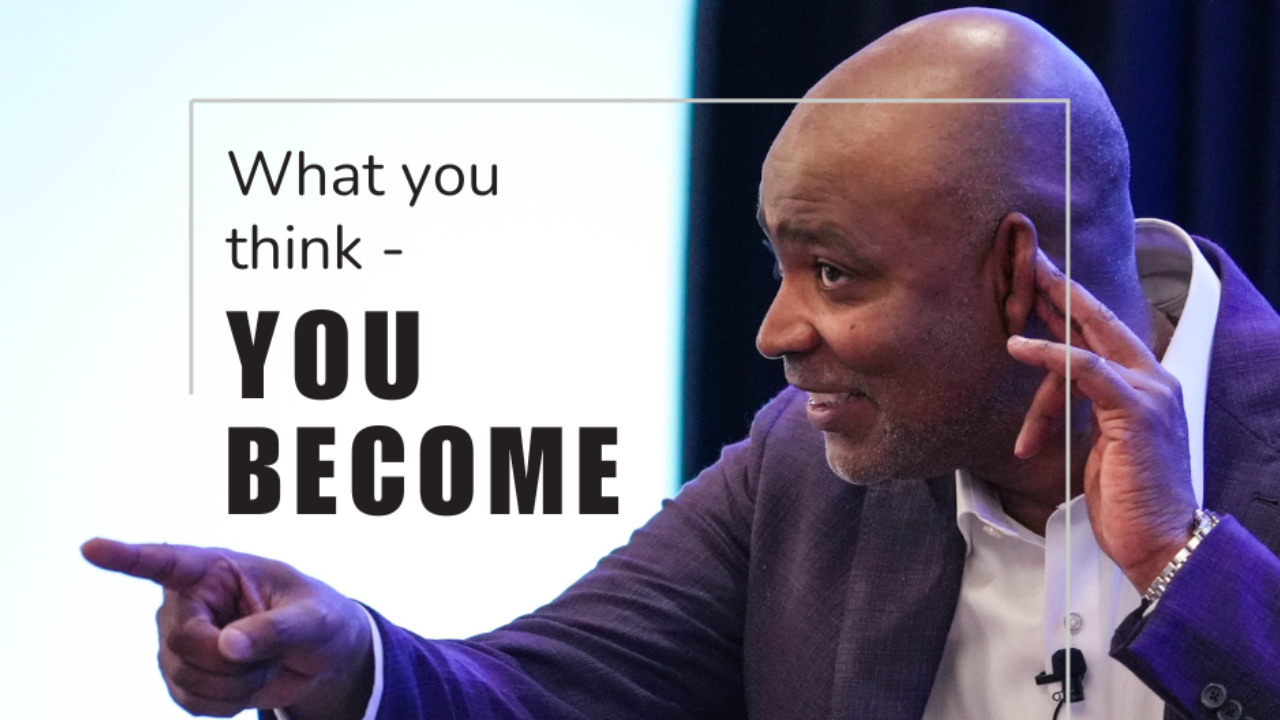
Early in my career, I had a colleague down the hall who appeared to be the perfect human being. Her files were organized with surgical precision.
Every document had a name like:
2023-09-21_StrategicPlan_FINAL_v3_HASHTAG_PERFECT
Meanwhile, my filing system looked more like:
ImportantStuff2_FINAL_realfinal_USETHISONE.docx
She was calm. She was organized--always perfectly put together--the kind of person whose hangers are always pointing in the same direction in their closet and bookcase is sorted alphabetically and by genre. Naturally, I assumed she was destined to become a great leader; and naturally, I assumed I was … not.
My internal dialogue sounded like this:
- “I’ll never be that organized.”
- “Real leaders have systems.”
- “Real leaders probably balance their checkbooks with daily entries.”
For those of you under 35, a checkbook was a prehistoric financial artifact we used to track our spending before apps; and yes, mine was never updated. I went with more of a ‘feel’ like I still have money in my account vibe.
The Myth of the Perfect Leader
In my mind, leadership required: immaculate organization, perfectly put together appearance, color-coded binders, and lots of post-it notes and shiny plastic paper protectors. If you were disorganized, mismatched or slightly chaotic you were clearly not leadership material.
Then one day something happened that completely shattered this belief.
The Parking Garage Incident
Let me set the scene, I was walking with the president of the university where I worked. He was brilliant, visionary--a real mover and shaker. He was the kind of leader who could walk into a room and shift the conversation instantly. We were heading to an important meeting. We got to the underground parking garage . . . and we began looking for his car . . . row after row . . . level after level. Ten minutes passed, then fifteen, then twenty. Finally, he stopped, looked at me, and said: “Oh… I just remembered. I didn’t drive today.”
At that moment two things became clear:
- Great leaders are not always organized.
- I had spent years criticizing myself for the wrong reasons.
The Dangerous Game of Comparison
Psychologists call this upward comparison—when we compare ourselves to someone we perceive as superior. Sometimes that motivates us. It worked for me when I reached for another second or two off my 200-meter sprints back in high school. I was doing something I was already good at and looking to improve my technique just a hair or push myself to do one extra rep in training.
It’s a problem when it leads to self-criticism, and our inner dialogue becomes brutal.
We say things like:
- “I wish I were smarter.”
- “I wish I were more organized.”
- “I wish my hair didn’t curl up like this.”
Nobody is happy with the talents they actually have. Human beings are astonishingly programmed to be covetous—we want someone else’s gifts.
The Voice in Your Head Matters More Than You Think
The real problem isn’t the comparison. It’s okay to live in reality—to honestly assess ourselves. In fact, it can save us a lot of heartache to move towards our strengths.
The real problem is the story we tell ourselves afterward. Many leaders do something subtle but damaging. They begin meetings by apologizing for themselves. You’ve heard it. Maybe you’ve even said it.
“I know this presentation isn’t as good as Fiona's. I'm no artist.”
“I’m not as organized as Hugo, but…”
“This won't sound as eloquent as Rin…”
STOP!
Every time you do that, two diminishing things are happening:
- You are TRAINING your brain to BELIEVE the criticism.
- You are TEACHING others how to CATEGORIZE you.
Self-deprecating humor is not fine. I am guilty of it far too much. You are eroding your credibility.
There’s research showing that what we repeatedly tell ourselves influences how we think and act. One of the leading researchers in this area is psychologist Sonja Lyubomirsky. Her research on happiness shows that intentional positive practices—like affirmations and gratitude exercises—can measurably increase well-being and resilience.
Social psychologist Claude Steele introduced self-affirmation theory, demonstrating that when people reflect on their strengths and values, they become more resilient to criticism, more open to feedback and less defensive under pressure
Self-affirmation exercises can:
- reduce stress responses
- improve academic performance
- increase problem-solving persistence
In other words: Your inner dialogue is not just motivational fluff. It is cognitive conditioning. Your thoughts influence your beliefs. Your beliefs influence your behavior. Your behavior shapes your outcomes. Changing your thoughts is the key to unlocking your potential. A simple, powerful tool for changing your thoughts is Affirmations.
How to Write Powerful Affirmations
Most affirmations fail because people write them like motivational posters: “Everything will be amazing today!” Your brain hears that and says: “Relax, buddy. Let’s start with coffee.”
Effective affirmations follow three simple psychological rules.
1. Write them in the present tense
Not: “I will become confident.”
Instead: “I ask thoughtful questions and learn quickly.”
Your brain responds more strongly to present tense statements.
2. Anchor them in real strengths
Not: fantasy, “I am a Queen!”
Instead: “I am a people person. I can approach anyone.”
Affirmations work best when they reinforce existing capabilities.
3. Connect them to values
Not: “I’m upbeat and creative.”
Instead: “I create opportunities for others to succeed.”
Research shows affirmations tied to personal values are far more powerful.
A Simple Leadership Exercise
Try this. Write three affirmations. Put them somewhere you will see them every day: your desk, your phone background or your bathroom mirror.
Mine might look something like this:
- I am the Captain of my ship and the master of my fate.
- I can learn anything!
- Nobody outworks me.
Repeat them daily. Not because you're trying to fool yourself--because you're training your brain to focus on your strengths.
So, the next time that voice in your head starts saying: “I’m not good enough.” Pause. Replace it with a positive affirmation because, in the end:
What you tell yourself is who you will become.
Author

