
What am I here to Learn?
Apr 14, 2026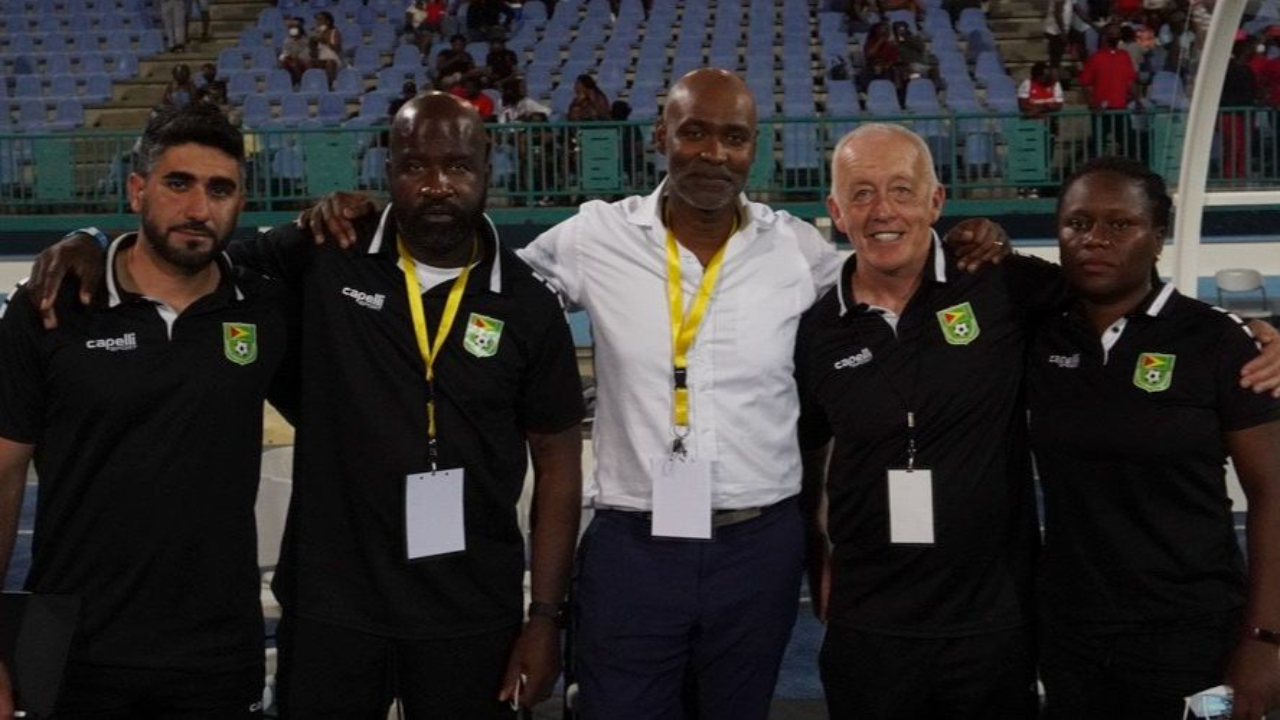
Four years ago today, I coached my final international match as Head Coach of the Guyana Women’s National Team.
It was a spirited battle in front of more than 7,500 fans packed into Dwight Yorke Stadium. The stands were a sea of red and black with Trinidad and Tobago supporters roaring for their team and willing them forward with beat of a drum.
The stakes could not have been higher.
We had gone undefeated in pool play, but because of goal differential, a tie was not enough. We needed a win to advance to the CONCACAF World Cup Finals.
For a while, it looked like we were going to do it. We went into halftime up 1–0.
Then came the push you knew would come. Trinidad came out of the break with a jolt of energy and eventually leveled the match at 1–1 on a penalty kick. Our team did not fold. We responded. We fought back. We found another goal: 2–1.
The clock was winding down.
Against all odds, we were on the verge of beating a team that had beaten us 6–0 the last time we played them four years earlier. Think about that.
From 6–0 to this.
From overwhelmed to within moments of history.
From being outclassed to standing on the edge of breakthrough.
In the final minutes, off a throw-in, there was a scramble in the box. A bobble, a deflection with one mistimed decision, and suddenly, the ball was in the back of our net: 2–2.
Just like that, it was over:
No celebration, no miracle ending, no trip forward--just silence.
It felt like a punch to the chest. The kind of loss that leaves everybody staring out the bus window on the ride home, searching for words that do not come.
Yes, we had gone through pool play undefeated. Yes, it was one of the best showings in the history of the program. Yes, objectively, there was a lot to be proud of, but in that moment, there was no consoling us.
It was one of the toughest defeats of my career.
What I have learned since is this:
Some losses do not feel like lessons at first. They feel like devastation. They feel unfair. They feel personal. They feel like all the work, all the sacrifice and all the belief should have guaranteed a different ending.
Here’s the lesson: Excellence and mastery do not come from avoiding those moments. They come from being willing to enter them.
You do not achieve greatness by only stepping into situations where success is likely. You achieve it by putting yourself in positions where failure is possible, where the stakes are real, and where the outcome matters enough to break your heart.
That is where the real learning lives.
It’s not in the shallow analysis, or in the reactive blame, or in the easy answers people reach for when pain is fresh.
Real growth asks more of us.
It asks us to sit with the disappointment long enough to hear the deeper question begin to rise: What am I here to learn?
That question changed everything for me because once the emotion settled, the educator in me started to stir--not the critic or the excuse-maker--the educator. The voice that understands that every painful result contains data, not just technical data--human data, leadership data and character data.
If we are brave enough to examine it honestly, failure will reveal where we were strong, where we were exposed, and where we still had work to do. That kind of reflection is hard.
It is easy to blame the referee. It’s easy to focus on the bounce. It’s easy to point at one player, one moment, one mistake. It is much harder to go deeper--to ask why. Then ask why again and again, and again, and again. Keep asking until you get past the surface and into the truth.
That kind of reflection requires something most people avoid: vulnerability. The willingness to expose your own warts and wrinkles. The determination to look at yourself without the armor and to admit where you misjudged, where you hesitated, where you could have led better, prepared better and responded better. That is not weakness. That is the work.
The teams, leaders and performers who eventually reach mastery are not the ones who never fail. They are the ones who refuse to waste failure. They mine it, study it, learn from it and allow it to reshape them.
Four years later, that match still stings. Part of me hopes it always will because some defeats are so painful precisely because they mattered so much. Sometimes the losses that hurt the most become the moments that teach us the best—if we are humble enough to listen.
I did not get the ending I wanted that night, but I got a lesson I have carried ever since:
If you want excellence, you must be willing to risk heartbreak. If you want mastery, you must be willing to confront failure without flinching; and, if you want to grow, you have to stop asking, “Who do I blame?” and start asking,
“What am I here to learn?”
Author

